
Foxcairn
A cairn is a stack of stones left by travellers to mark the path for whoever comes next.
This one is private — a small node and workshop, by invitation. What is built here is meant to outlast the session it was built in.
members only · no anonymous access beyond this page
The work in hand
Coalhearth
A co-operative RPG for a group of friends who are never online at the same time. Nobody shares an instant; you share a place. Everything anyone does is still there when the next person arrives — and the world keeps moving while all of you are asleep.
That constraint removes the hardest problem in multiplayer. There is no netcode here, no prediction and no authoritative tick: every interaction is an ordinary write against shared state.
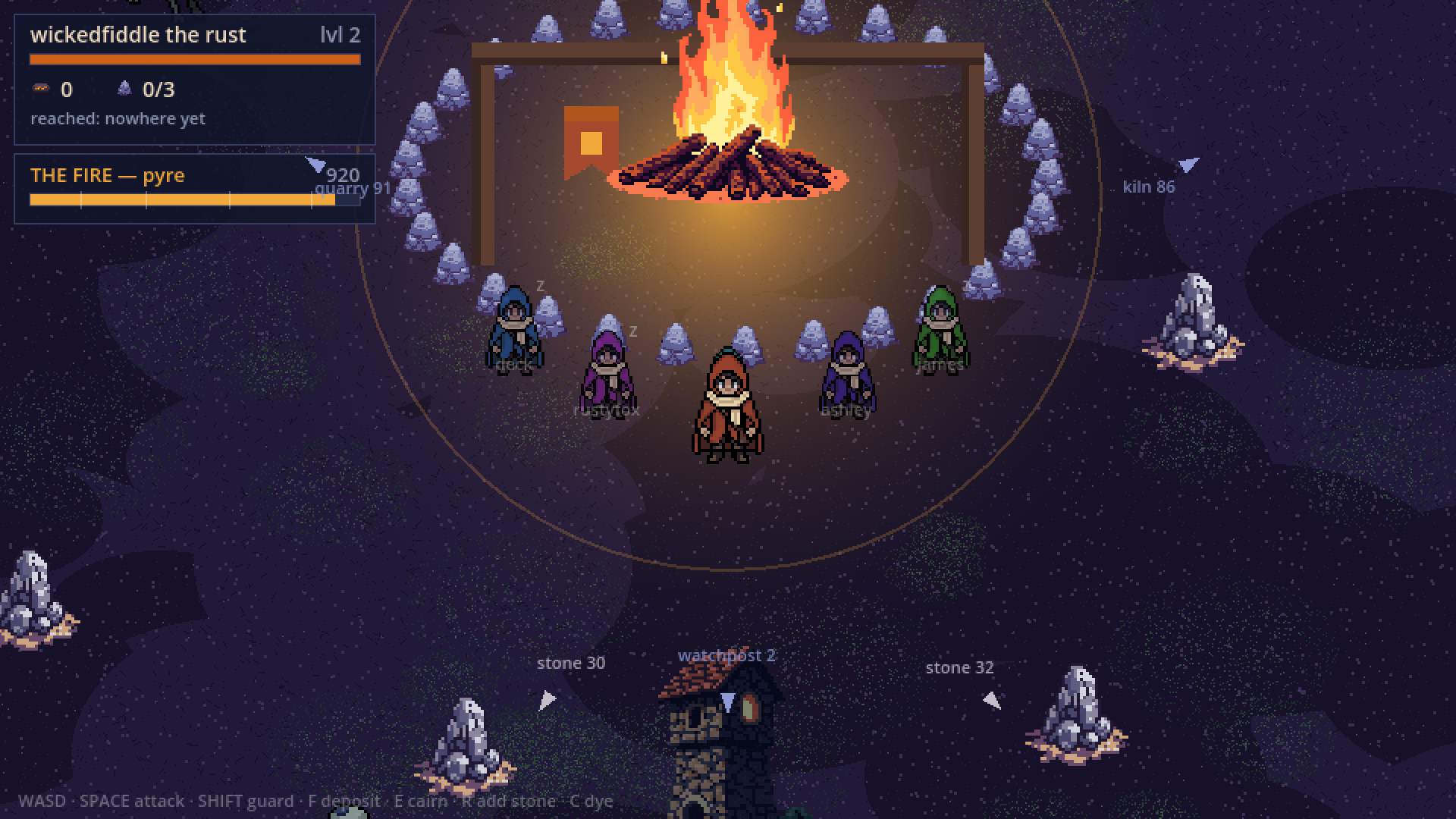
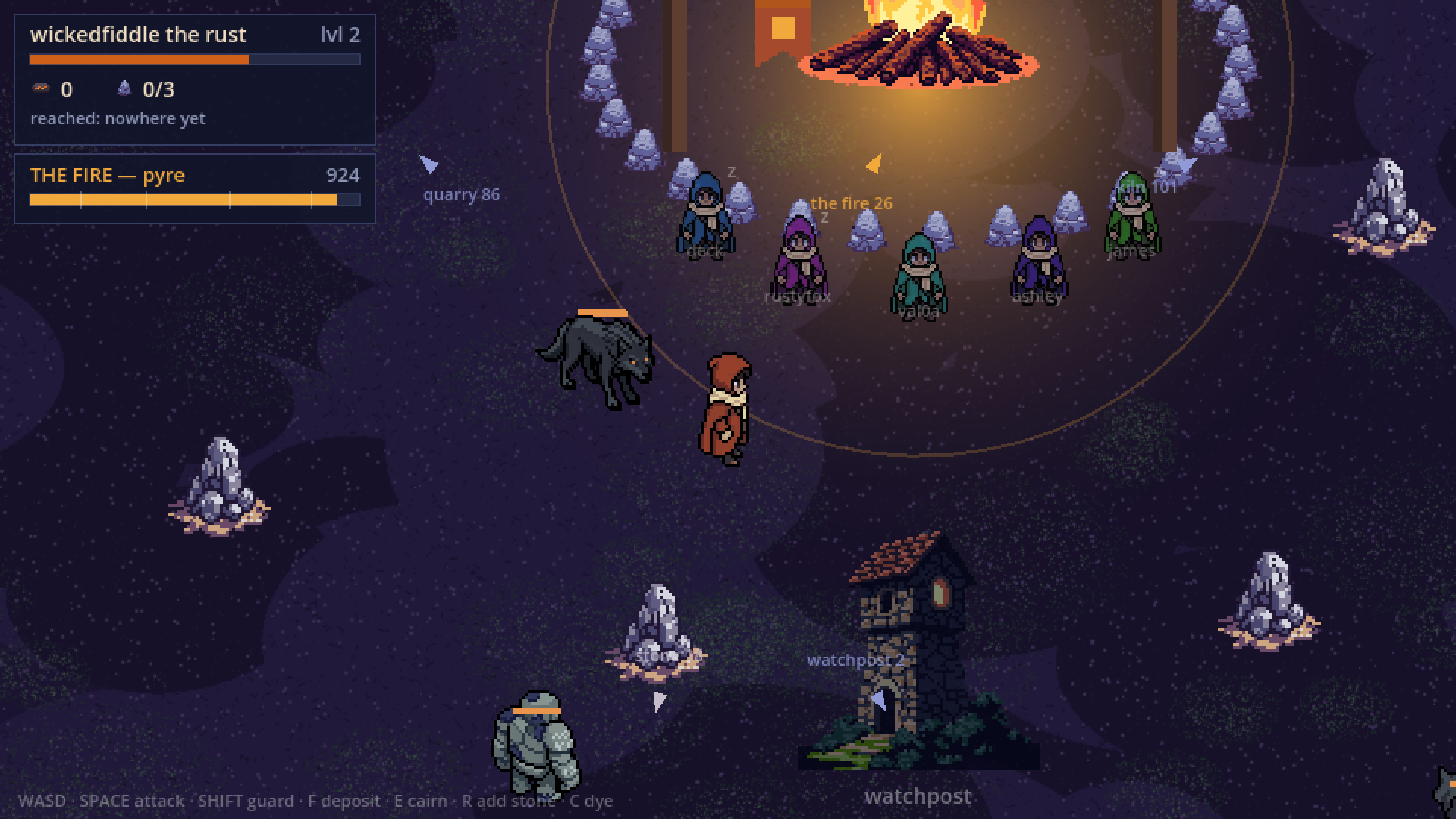
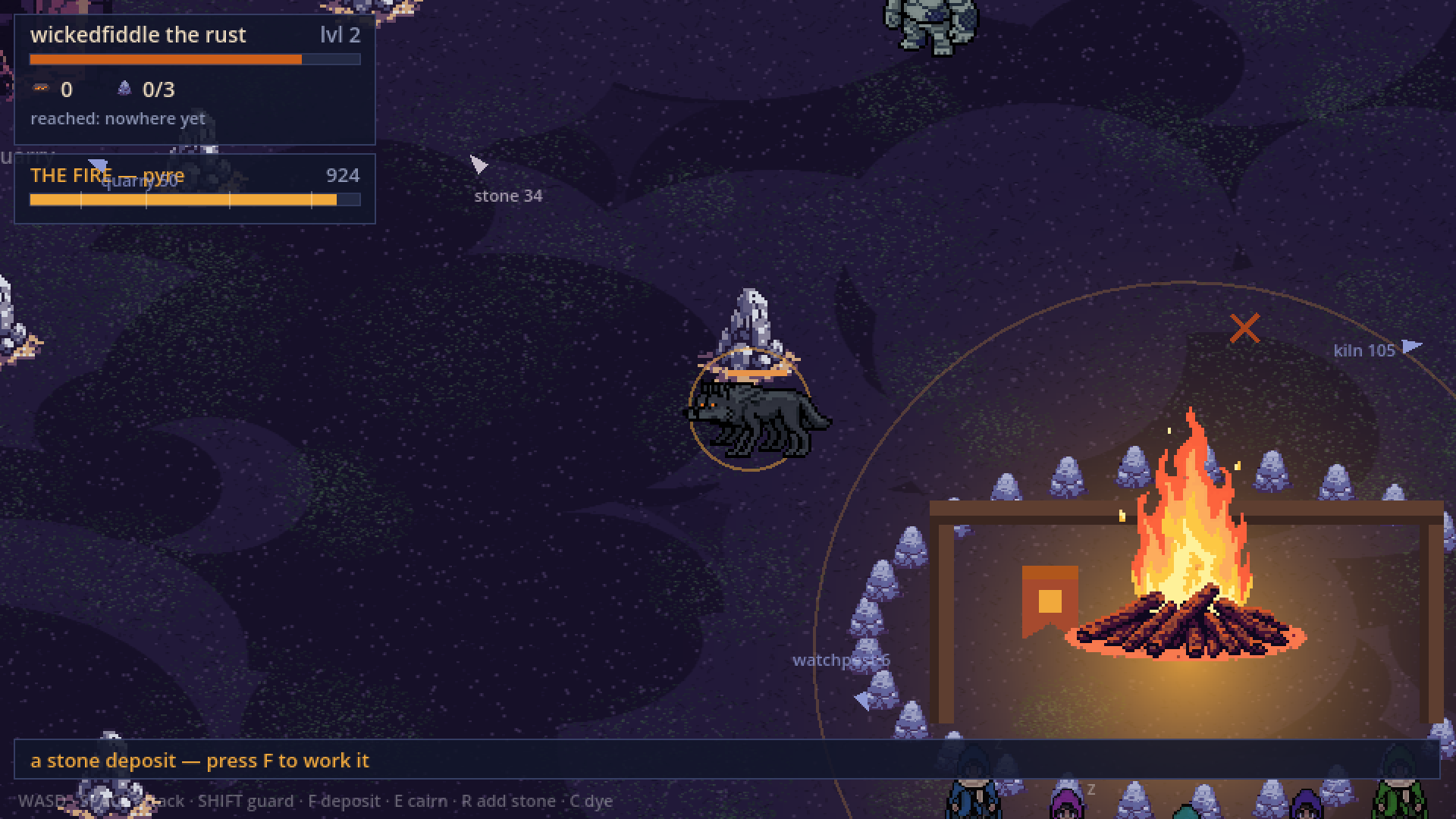
See the sprites animating → — the real atlases, running in the page at whatever speed you set.
The node
Built to be private first
The interesting constraint was not making it work; it was making a personal server safe to expose at all. The shape below is the answer, and everything on this page runs on it.
- Nothing private is public. Every service sits behind single sign-on, enforced at the reverse proxy — not inside each application, where one missed route becomes a hole.
- The admin plane is not on
the internet. Management reaches the origin over a private mesh only; the
edge closes
22once that mesh is confirmed up, and refuses to close it before. - The game's API publishes no port. It trusts an identity header, which is only safe because nothing but the proxy can reach it — verified by forging it from outside and being refused at the gate.
- No credential lives on the exposed box. Certificates are issued over HTTP, so no DNS API token is ever stored somewhere the internet can reach.
- Deploys verify from outside. A release is checked from a different machine across the public internet, because a box asking itself whether it is up will always say yes.
Also here
The workshop
Smaller things, mostly built to solve something that was actually annoying.